
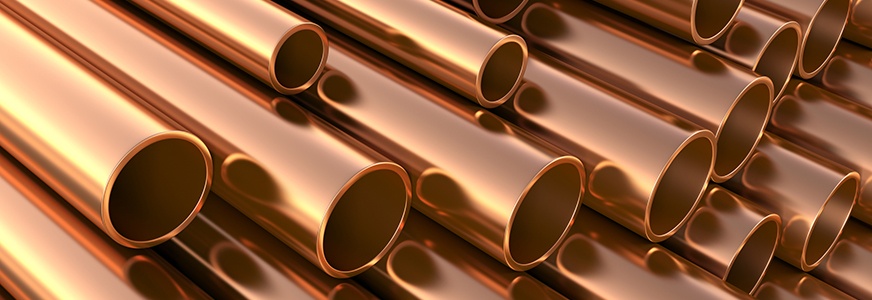
In today’s advanced manufacturing world, surface treatment technologies play a crucial role in improving product performance and longevity. Among the many finishing methods available, Copper Coating stands out as one of the most effective and versatile solutions. Known for its outstanding conductivity, corrosion resistance, and aesthetic appeal, Copper Coating is widely used across industries such as electronics, automotive, aerospace, and precision engineering. This process not only protects materials but also enhances their efficiency, making it indispensable in modern production systems.
What Is Copper Coating?
Copper Coating refers to the process of applying a thin layer of copper onto the surface of another material, typically metal, but sometimes even plastic or ceramic. This coating can be applied through several methods, including electroplating, thermal spraying, or chemical deposition. Regardless of the method, the result is a strong, conductive, and corrosion-resistant layer that significantly improves the underlying material’s performance.
The Science Behind Copper Coating
The reason Copper Coating is so effective lies in the unique properties of copper. It is a highly conductive, ductile, and malleable metal with natural resistance to corrosion. When deposited on another material, copper forms a uniform and adherent layer that enhances mechanical strength and thermal stability. This combination of physical and chemical advantages makes it an excellent choice for industries that demand precision and reliability.
Benefits of Copper Coating in Modern Manufacturing
Manufacturers choose Copper Coating for its wide range of functional and technical benefits:
- Superior Electrical Conductivity – Copper is one of the best conductors of electricity, making Copper Coating ideal for electronic components, printed circuit boards, and power systems.
- Enhanced Thermal Conductivity – The coating efficiently transfers heat, improving cooling and performance in machinery and electronic assemblies.
- Improved Corrosion Resistance – Copper acts as a protective barrier against moisture, oxidation, and chemicals, extending the lifespan of critical components.
- Better Adhesion for Subsequent Layers – Copper creates an ideal foundation for further coatings, such as nickel or chrome, ensuring stronger adhesion and long-lasting performance.
- Aesthetic and Decorative Appeal – With its warm metallic hue, Copper Coating also enhances the visual appearance of finished products.
- Dimensional Restoration and Wear Resistance – It can restore worn surfaces and increase resistance to friction, which is essential in mechanical and tooling applications.
Key Industrial Applications of Copper Coating
The versatility of Copper Coating allows it to be used across numerous sectors:
- Electronics and Electrical Engineering – Used in connectors, cables, and PCB components for superior electrical performance.
- Automotive Industry – Applied to engine parts, brake systems, and decorative trims for both functional and aesthetic purposes.
- Aerospace and Defense – Provides thermal protection and anti-corrosion layers for critical aircraft and satellite components.
- Manufacturing and Tooling – Strengthens molds, dies, and industrial equipment to resist wear and mechanical stress.
- Renewable Energy Systems – Improves efficiency in solar, wind, and power generation systems due to excellent conductivity.
- Architectural and Decorative Design – Adds elegance and durability to fixtures, hardware, and interior details.
The Copper Coating Process
The process of applying Copper Coating depends on the desired finish and technical requirements, but the basic steps often include:
- Surface Preparation – The base material is cleaned and degreased to ensure proper adhesion.
- Application Method – Copper is applied through electroplating, chemical deposition, or thermal spraying.
- Thickness Control – The coating layer is built up to meet the exact specifications needed for the product’s performance.
- Finishing and Inspection – After coating, the surface is polished, measured, and inspected for quality consistency.
Precision control at every step ensures a flawless finish that meets high industry standards.
How Copper Coating Enhances Durability
Durability is one of the most critical attributes in modern manufacturing. Copper Coating enhances it in several ways:
- Corrosion Prevention – The copper layer protects metal substrates from environmental degradation.
- Mechanical Strength – By creating a strong bond, it reinforces the surface and reduces wear under mechanical stress.
- Thermal Stability – It prevents material degradation in high-temperature environments.
- Extended Product Lifespan – Components coated with copper last longer, reducing maintenance costs and downtime.
How Copper Coating Improves Conductivity
Electrical and thermal conductivity are among the defining advantages of Copper Coating. In electrical engineering, it ensures minimal resistance and optimal current flow, which improves efficiency and reduces energy losses. In mechanical and aerospace sectors, its superior heat transfer properties prevent overheating and improve system reliability. This dual functionality — electrical and thermal — makes Copper Coating a top choice for performance-critical applications.
Environmental and Economic Benefits
Modern Copper Coating technologies have evolved to meet sustainability goals and cost-efficiency standards. The process uses recyclable materials, generates minimal waste, and extends component life, which reduces resource consumption. Additionally, copper’s recyclability ensures that end-of-life materials can be recovered and reused, aligning with eco-friendly manufacturing principles.
The Future of Copper Coating
As industries embrace electrification, renewable energy, and smart technologies, Copper Coating is becoming even more valuable. With continuous improvements in coating precision, automation, and environmental control, copper finishes will continue to define the standard for quality and performance in advanced manufacturing.
Copper Coating is more than just a surface treatment — it’s a performance upgrade that modern manufacturing cannot do without. By enhancing durability, conductivity, and resistance, it ensures that products remain efficient, reliable, and visually appealing for years. Whether applied to electronic components, automotive systems, or architectural details, Copper Coating continues to prove its importance as a cornerstone of industrial innovation and surface engineering excellence.