
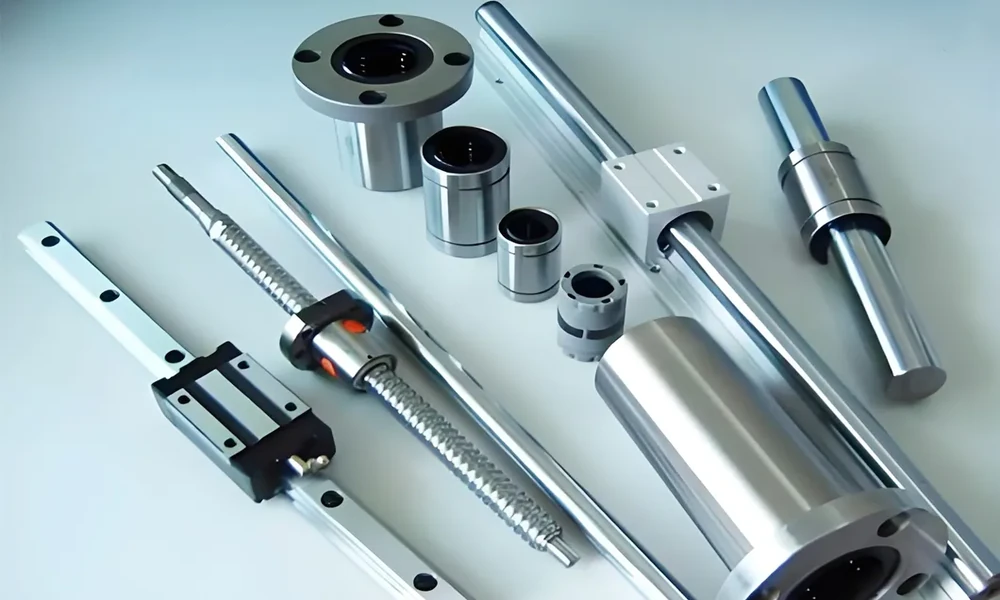
Noise and vibration in LMK slide bearings can compromise the positioning accuracy of linear motion systems and accelerate wear on internal machine components. This issue is particularly critical for high-speed machinery operating under continuous production schedules. Addressing these operational challenges requires a systematic approach, ranging from verifying installation alignment and controlling environmental factors to selecting components suitable for the specific application.
1. Check and Correct the Installation Alignment
The installation of LMK slide bearings should ensure that the bearing, shaft, and supporting structure are properly aligned. Even a slight misalignment can cause uneven load distribution, create side pressure, and prevent the bearing from moving smoothly.
To solve this issue, the shaft alignment should be inspected using appropriate measuring tools. The flatness of the mounting base and the tightness of fastening components should also be checked. If any installation errors are found, adjustments should be made to ensure balanced force distribution during movement, helping reduce impact noise and vibration during operation.
2. Select and Control Lubrication Properly
Proper lubrication is essential for maintaining smooth motion in THK LMK slide bearings, especially in high-speed machinery. Using an unsuitable lubricant can increase drag, promote thermal buildup, or generate friction noise across contact surfaces.
Select lubricants based on operational speed, temperature ranges, and duty cycles. Establish routine lubrication schedules and avoid over-greasing, as excessive lubricant can increase internal churning resistance and elevate operating temperatures.
3. Prevent Dust and Contaminants from Entering the Bearing System
Industrial environments frequently present airborne dust, metal shavings, and oil residue that can enter the contact area between the LMK slide bearing and the shaft. These particles can score contact surfaces, increase friction, and lead to abnormal noise or unstable motion.
To prevent this problem, protective equipment such as seals or covers should be installed in high-risk areas. The machine area and shaft should also be cleaned regularly. For applications in environments with high levels of debris, periodic inspections and cleaning schedules should be implemented to prevent problems caused by contaminant buildup.
4. Inspect Damage to the Shaft and Related Components
In some cases, noise and vibration may not be caused directly by LMK slide bearings but by other components, such as the shaft, mounting parts, or supporting structures. For example, worn surfaces, dents, or uneven shaft conditions can prevent the bearing from moving smoothly along the surface.
The condition of the shaft and surrounding components should be carefully inspected for signs of wear, cracks, or surface abnormalities. If any issues are found, they should be corrected before installing a new bearing. This helps prevent repeated damage and allows the system to operate at its full efficiency.
5. Adjust Load and Speed According to Specifications
Using LMK slide bearings beyond their designed specifications, such as excessive loads, higher operating speeds than recommended, or continuous operation for extended periods, can create excessive internal stress. This may result in increased noise and vibration.
To solve this problem, actual operating conditions should be compared with the bearing specifications, including load capacity, operating speed, and duty cycle. If the system is overloaded, a bearing model with higher load capacity may be required, or operating conditions should be adjusted to reduce stress on the components.
6. Replace Bearings When Wear Is Detected
After long-term operation, LMK slide bearings may experience internal wear, such as increased clearance, unstable movement, or continuous abnormal noise. Continuing to operate with worn bearings may affect machine accuracy and overall performance.
Regular bearing inspections should be carried out as part of preventive maintenance. When signs of damage are detected, the bearing should be replaced with a suitable LMK slide bearing that matches the existing system. This helps reduce machine downtime, improve operational stability, and prevent damage to other components in the long term.
7. Implement Monitoring and Preventive Maintenance Systems
For high-speed machinery, waiting until problems occur before performing repairs can lead to longer downtime and higher maintenance costs. Preventive maintenance is therefore an important approach to reducing risks.
A regular inspection schedule should be established to monitor abnormal noise, temperature, vibration levels, and bearing movement conditions. Collecting maintenance data helps identify potential failure trends and allows operators to plan component replacements before serious problems occur.
Resolving noise and vibration in linear motion systems requires a comprehensive approach covering installation precision, contamination control, operating loads, and structured maintenance. Proper system management helps ensure reliable machine operation and extends component service life.
For facilities seeking to improve motion system stability, selecting precision components that match application requirements is essential. The LMK slide bearing series (ลูกปืนสไลด์ LMK) is a product line manufactured by THK, designed specifically for industrial linear motion applications.
To learn more about THK products or to receive technical support, authorized distributor I.N.B. Enterprise provides product information, engineering data, and guidance to help select the appropriate linear motion specifications for your operational requirements.