
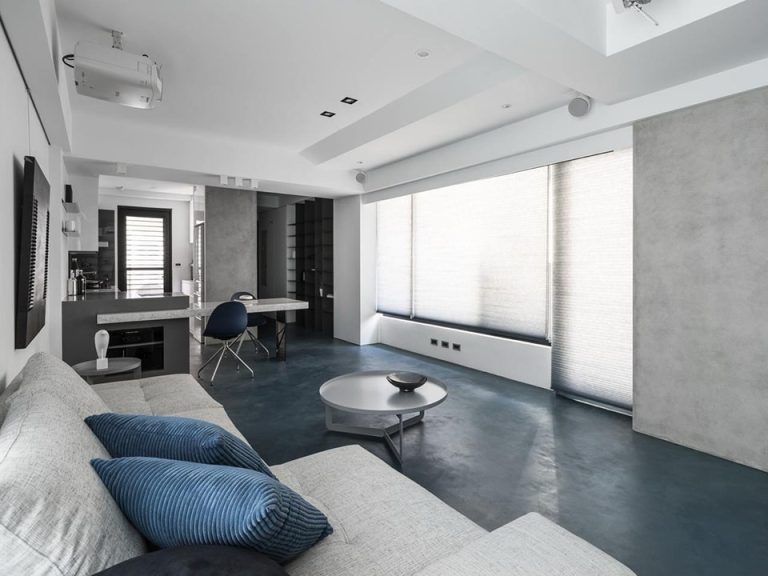
“Details make perfection, and perfection is not a detail.” With that ethos, this guide explores why microcement flooring is rapidly shaping UK interiors—valued for its seamless continuity, slim 2–3 mm build that avoids door and skirting reworks, bespoke textures, and the ability to refresh without ripping out existing substrates.
Designers’ Top Reasons to Choose Microcement Flooring in 2025
The buzz isn’t hype—it’s the seamless microcement look that makes open spaces feel bigger, cleaner and sharper. You get a thin build-up (typically 2–3 mm), so most projects become a swift refurb instead of a full rip-out, with custom finishes ranging from soft matte to silk-sheen. UK signals back it up: Google queries for “microcement flooring” have jumped across London and Manchester, boutique hospitality fit-outs are using it for floor-to-wall continuity, and reputable suppliers now push low-VOC sealers that align with RIBA sustainability goals. “We specify it because it flows flawlessly from floors to walls, killing ugly joints and making small spaces read as generous,” says a Shoreditch-based interior designer.
- Why designers love it: continuous, joint-free surfaces; rapid upgrades over sound substrates; premium concrete aesthetic without the weight.
- Performance perks: water-resistant seal systems for bathrooms and kitchens; easy maintenance compared to grout-heavy surfaces; bespoke pigments tuned to brand palettes.
- UK proof points: rising search demand, proven in boutique hotels and cafés, expanding installer networks with audited training.
When it’s not ideal: avoid heavy point loads without a reinforced, stable substrate; manage moisture and vapour in ground floors; insist on proper priming and sealing to dodge stains and microcracks. Micro take: Best fit for open-plan refurbishments, bathrooms, and stair runs with a unified finish where you want that crisp, gallery-grade continuity without demolishing the whole build-up.
Check Festfloor Titan: https://festfloor.com/pages/festfloor-titan-hard-microcement-for-floors-and-stairs
Finishes, Colourways and Textures that Set the Tone
Microcement finishes aren’t just surface choices; they set the emotional temperature of a space. Go matte with a fine grain when you want calm, low-reflection floors that swallow glare and read quietly under soft light. Choose a subtle satin sheen and light burnish if you want movement and depth without going shiny. Push a touch of clouding in the trowel marks for character, or keep it tight and micro-textured for that gallery-clean vibe. Practical layer: specify slip-resistance with mineral aggregate or an anti-slip sealer in wet zones, and check colour fastness under UV if you’ve got big south-facing glazing—cheap pigments will drift, premium systems hold tone.
- Calm spa: pale greige, matte, fine grain. Pair with limewash walls and brushed brass to keep the space warm and cocooning.
– Use it in: ensuites, wellness rooms, quiet living zones.
– Mistake to avoid: going gloss in wet areas—water spotting and slip risk will ruin the zen. - Modern industrial: cool mid-grey, satin, light burnish. Pair with black fixtures and oak accents for contrast and balance.
– Use it in: kitchens, open-plan lofts, hardworking hallways.
– Mistake to avoid: heavy clouding under harsh track lights—it can read messy rather than intentional. - Warm minimal: clay nude, matte, micro-texture. Pair with warm woods and linen fabrics for softness without fuss.
– Use it in: family rooms, home offices, rental-friendly refreshes.
– Mistake to avoid: overly dark tones in small north-facing rooms—they compress the space and kill the glow.
Pro tips that save headaches: specify a system-based sealer (primer + body + topcoat) for consistent colour uniformity, and sample your finish at full build-up—not just a swatch—so you see real texture, sheen and movement. Where sunlight is brutal, pick UV-stable pigments and consider a matte anti-UV topcoat. For bathrooms and entries, upgrade to anti-slip micro-aggregate at the final coat; it’s near-invisible but adds grip. Keep it all clean with a neutral pH cleaner and a periodic maintenance coat to protect the sheen you sweated over.
Room-by-Room Suitability and Practical Tips
Bathrooms and wet rooms love microcement, but only when the build-up is done with proper tanking behind it, a specified fall to drain (think 1–2%), and an anti-slip topcoat so you’re not skating on spa day. Example that always lands: a walk-in shower with coved skirting that rolls the finish up the wall for a tight, seamless look. Prep must: verify substrate flatness and moisture limits with a hygrometer before you even open a bucket. Risk to manage: pooling water at corners—sort the falls and add a secondary drain if needed.
- Kitchens demand honesty: microcement is resilient, but you need a plan for stain management—especially oil and turmeric. Go for a satin sealer for daily cleanability and a grown-up sheen. Killer move: a colour-matched island-to-floor wrap that makes the whole space feel custom. Prep must: ensure the substrate is rigid and flat (cement board or well-fixed screed). Risk to manage: thermal movement near ovens and south-facing sliders—allow perimeter breaks and mind appliance heat spill.
- Living areas and hallways look cinematic with a continuous run—for instance, flowing from hallway to lounge with no visual breaks. Over big spans, include discreet expansion joints and put a decent doormat at entries to keep grit from chewing the finish. Prep must: SR1 flatness or a self-leveller so the trowel coat sits like glass. Risk to manage: micro-scratching from sand and pet claws—add felt pads and routine maintenance coat.
- Stairs need respect: specify nosing profiles, edge reinforcement (mesh and resin at treads/risers), and a subtle grip strip at the front edge. A slick detail is a closed-string staircase with matching risers for a monolithic look. Prep must: rigid, squeak-free carcass with consistent edges. Risk to manage: delamination on exposed noses—mechanical keying and correct primers are non-negotiable.
- Outdoors and thresholds can work, but only with an approved exterior system, a weatherproof UV-stable sealer, and controlled drainage. Keep sun and frost in mind—choose lighter tones for heat moderation. Prep must: confirm moisture content of the slab and a proper falls-to-drain. Risk to manage: UV fade and water ingress—detail thresholds with drip edges and maintain the topcoat on schedule.
Installation and Substrate Preparation: A Step-by-Step Plan
Start with a ruthless survey of the floor. Note the substrate type, map cracks, check flatness, and measure moisture (aim for ≤75% RH on screeds or follow the specified system). Then get practical: grind and clean, chase and fill cracks, spot-level dips and humps, and prime the bonding layer specified by the manufacturer. Mark every movement joint and plan how to carry it decoratively through the finish so it looks intentional, not like a mistake. For the base build, add reinforcement (mesh or fibre) where required, apply base coats with a tight trowel, and sand between coats to keep the total thickness at a clean 2–3 mm. The finish build is where you dial in the look: lay 1–2 decorative coats, keep the trowel pattern deliberate, then sand to uniformity for that calm, high-end microcement vibe.
- Sealing: Go for 2–3 coats (a penetrating sealer plus a hard-wearing PU topcoat), and specify a slip rating that suits the space, e.g. PTV ≥36 wet for bathrooms.
- Curing and handover: Keep the area protected from traffic, water, and steam. Expect light use at 48–72 hours and full cure around 7 days (system dependent).
- Underfloor heating: Commission the UFH before installation, switch it off 24 hours prior, then bring heat back gently after sealing at +2–3°C per day.
- Compact timeline (20–25 m²): Day 1 prep/prime; Days 2–3 base coats; Day 4 decorative coats; Day 5 seal; Days 6–7 cure.
Pro tip for a resilient, design-led floor: lock in the spec early, including moisture thresholds, reinforcement, number of coats, sealer system, and slip resistance. Keep the site clean, control temperature and humidity, and treat movement joints as a feature, not a flaw. That’s how you get a lean 2–3 mm microcement floor that looks sharp, wears hard, and passes snagging without drama.
Performance, Maintenance and Lifespan in Real Homes
Set real-world expectations: microcement brings high surface hardness and a tight, seamless look, yet it’s still cementitious—so a lived-in patina is part of the charm. Expect micro-scratches from grit if you skip entrance mats, and treat spills like red wine, coffee or oil as urgent—wipe up promptly to avoid shadow stains. Day to day, you’re looking at low maintenance: a quick dry mop keeps dust at bay; a weekly pass with a pH‑neutral cleaner resets the sheen. Skip bleach, acids, and steam mops (they bully the sealer). Add felt pads under chairs and drop entrance mats to stop grit at the door. For protection, plan a reseal cadence: light residential every 2–3 years, busy kitchens or wet zones every 12–18 months—always follow the manufacturer’s system. Small chips? Spot-repair with a micro fill, colour-blend, then reseal. Bigger scars need a controlled resurface. Keep a colour sample from install for blending. Comfort-wise, good slip ratings are achievable with the right topcoat, warm feel with UFH beats chilly tiles, and paired with rugs you get softer acoustics than ceramics. On the eco side: choose low‑VOC sealers, leverage the thin overlay to avoid demolition waste, and check EPDs if the brand provides them.
Microcement vs Porcelain Tiles vs Engineered Wood — Care, Durability and Comfort
| Feature | Microcement (2–3 mm) | Porcelain Tiles (8–10 mm) | Engineered Wood (12–15 mm) |
| Surface hardness | High (sealer-dependent); micro-scratches possible | Very high; scratch resistant | Moderate; dents/scratches show |
| Stain resistance | Strong with proper sealer; wipe spills fast | Excellent on glaze; grout needs sealing | Moderate; needs finish care |
| Reseal frequency | 2–3 yrs light use; 12–18 mo heavy/wet | None; grout may need periodic seal | Every 3–5 yrs depending on finish |
| Repairs | Spot-repair feasible; large areas resurface | Chip replacement; grout refresh | Board replacement; refinish |
| Comfort & acoustics | Warm with UFH; quieter with rugs | Cool underfoot; harder acoustics | Warm feel; good acoustic damping |
| Slip resistance | Variable; choose R10–R11 topcoat | Available R10–R12 finishes | Moderate; varies by lacquer/oil |
| Sustainability | Low‑VOC sealers, thin overlay; check EPDs | Durable; grout/adhesive impact | Renewable veneer; adhesives matter |
| Daily cleaning | Dry mop; weekly pH‑neutral | Sweep/vacuum; neutral cleaner | Vacuum; wood-safe cleaner |
Quick homeowner checklist: moisture under control (CM/Tramex tested), correct sealer for traffic and slip rating, care kit on hand (dry mop, pH‑neutral cleaner, felt pads, touch‑up filler), entrance mats installed, reseal date noted in your calendar, and a saved colour sample for future repairs. Treat it right and you’ll get that long lifespan with the lived-in polish everyone keeps trying to fake on Instagram.
Costs, Timelines and Project Planning for UK Renovations
Budget smart, build once. Here’s the no-nonsense UK guide to microcement flooring costs, timelines and project planning that contractors actually use. Pricing shifts with substrate condition, system brand and site logistics, so treat this as a practical benchmark. Supply drawings, clear substrate photos, RH readings and UFH details to cut “contingency fluff” from quotes. Ask for the system brand, coat count, slip rating and warranty in writing. Expect a small bathroom to take 4–5 days plus cure; a 30–40 m² open-plan zone typically 5–7 days plus cure, with a buffer if levelling compound is required. ROI is where microcement bites: you get low height build-up for tight thresholds, fewer transitions across rooms, and a faster programme than many tiled installs. Maintenance is predictable too—reseal every few years instead of ripping out and replacing.
| Item | What to include | Typical range (excl. VAT) |
| Basic floor (flat, ready substrate) | 2–3 mm system, 2 seal coats | £85–£120/m² |
| Premium finish/colour | Special pigments, burnish, extra coats | +£10–£25/m² |
| Substrate prep | Grinding, patching, levelling compound | £10–£35/m² |
| Wet room upgrade | Tanking, anti-slip, extra sealing | £25–£60/m² |
| Stairs | Nosing detail, edges, per flight | £650–£1,200 |
| Travel/setup | Small jobs, site protection | £150–£400 |
Want sharper numbers? Give your installer the room dimensions, photos of edges/thresholds, UFH manifold info, and confirm slip resistance targets for kitchens or wet zones. Mini example: 22 m² kitchen, moderate prep, satin sealer comes in around £2,600–£3,200 with a 6‑day programme including cure. Compared with tile, you’re saving on , trims, and messy demolition down the line—pay for a quality sealer now and a quick reseal later, rather than a full strip-out. That’s real-world project planning that respects time, budget, and a clean design line.