
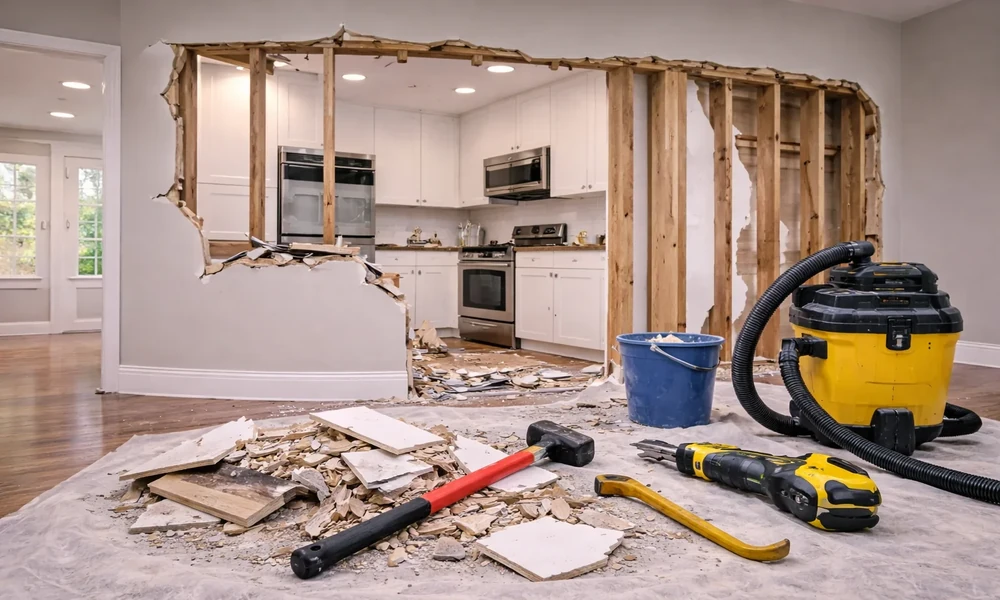
Most kitchen renovations stall in the gaps between trades. Rarely is the work itself the problem. A plumber finishes, then waits days for an electrician. Cabinets arrive before walls are ready to hold them. Skilled kitchen fitters in London close those gaps with one plan. Sequencing, handovers and delivery timing decide whether a project flows or drags.
Disconnected Trades Create Costly Waiting Periods
Each trade works to its own calendar. A gas engineer may book in three weeks away. Plasterers cannot start until first-fix wiring is signed off. Every pause leaves a household without cooking space for longer. In practice, a six-week job can stretch to ten. Idle days cause most of that drift.
What Does Correct Kitchen Fitting Sequence Look Like?
Order matters more than speed here. A coordinated fitter follows a fixed progression:
- Strip-out happens first, exposing pipes and old cabling.
- Plumbing and electrics are then routed at first fix.
- Plasterers skim walls once services are buried.
- Base units go in, followed by worktop templating.
- Appliances, splashbacks and final connections finish the job.
One Project Lead Controls Every Handover
With a single point of contact, nothing falls between trades. The lead confirms the electrician has finished before booking plastering. Measurements taken at survey stage reach the joiner unchanged. Homeowners using kitchen fitters in London gain exactly this oversight. It counts most in narrow terraced properties. Tight access and parking permits punish poor timing there.
Why Do Material Deliveries Need Tight Scheduling?
Quartz worktops cannot be cut until base units are fixed. Slabs ordered too early clutter a hallway for weeks. Late orders leave the sink disconnected instead. With coordination, each delivery lands just before its stage. Storage headaches disappear, and so does transit damage.
Which Problems Does Coordination Catch Early?
Separate contractors check their own work. A coordinated team checks how everything meets. Small oversights become expensive once walls are closed:
- Sockets clash with planned wall cabinets.
- Extractor ducting lacks an exit route.
- Floor levels slope under tall units.
- Waste pipes sit too low.
Idle Days Are the Real Renovation Cost
Homeowners often compare quotes on units and labor alone. Yet the six-week job drifting to ten tells another story. Those four extra weeks mean takeaways and a dust-covered home. Time, in other words, is the hidden budget line. Owning the sequence protects that line, whatever the quote says.
FAQs
How long does a coordinated kitchen fitting take?
A standard kitchen takes four to six weeks when properly sequenced. Larger layouts or structural changes can add a fortnight.
Do coordinated fitters handle gas and electrical certification?
Reputable teams bring in Gas Safe engineers and registered electricians. Certificates are collected and passed on at handover.
Can existing plumbing positions be moved?
Relocating a sink is possible but affects waste pipe gradients. Planning it at survey stage avoids lifting floors later.
Is it possible to live at home during the work?
Most households stay, using a temporary sink in another room. Good sequencing shortens time without a working kitchen.