
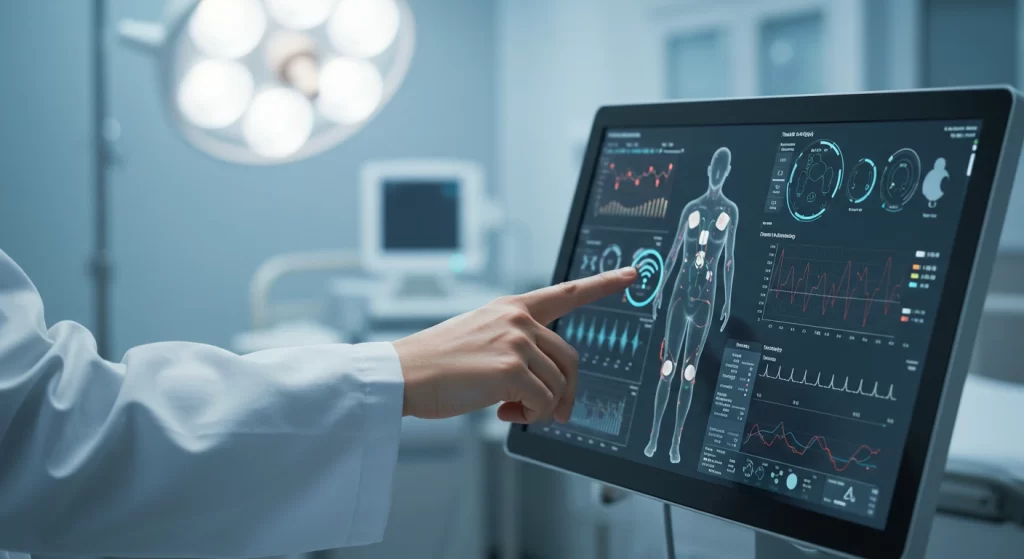
In the bustling suburb of Marathahalli, Bangalore-known for its IT parks, startups, and tech-savvy crowd-a quiet revolution is unfolding in the healthcare sector. The rise of AI-powered dashboards, often dubbed “Digital Nurses,” transforms how patient care is monitored and delivered. This innovation bridges the gap between medical staff shortages and growing patient demands. Unsurprisingly, professionals enrolling in an AI course in Bangalore increasingly consider healthcare a promising domain for AI applications.
What Is a Digital Nurse?
A Digital Nurse is an AI-powered monitoring system that tracks vital signs, analyses patient data in real-time, and provides clinical insights. These AI dashboards are integrated into hospital systems or home-based patient care environments. Acting as an ever-vigilant healthcare assistant, the Digital Nurse is capable of flagging early signs of deterioration, suggesting preliminary diagnoses, and even recommending treatment protocols-all while reducing the burden on human medical staff.
In hospitals around Marathahalli and other parts of Bangalore, AI dashboards are being adopted in ICUs, post-operative wards, and elder care units. These systems help nurses and doctors stay informed about every patient’s condition without manually checking vitals at intervals. This constant and intelligent monitoring significantly improves response time during medical emergencies.
Core Features of AI-Powered Patient Dashboards
The Digital Nurse is not a single tool but a seamless collection of integrated technologies. Here’s a breakdown of what typically powers these innovative systems:
- Vital Sign Monitoring: Using IoT-enabled devices, the system constantly monitors heart rate, blood pressure, oxygen saturation, temperature, and other important stats.
- Predictive Analytics: The dashboard can predict potential health risks or complications by analysing historical and real-time data.
- Machine Learning Algorithms allow the system to learn from patient outcomes and continuously improve its decision-making capability.
- Natural Language Processing (NLP): This is used to process doctor notes, lab reports, and patient histories to provide actionable insights.
- Alert System: This system instantly notifies doctors and caregivers through SMS, email, or app notifications when it detects a critical change.
- Integration with EHR (Electronic Health Records): Ensures that all data is securely stored and easily accessible for future consultations and diagnostics.
Applications in Hospitals and Home Care
In Marathahalli’s multispecialty hospitals, AI dashboards are used to manage patients in intensive care units more efficiently. These dashboards alert doctors about irregular heartbeats, abnormal breathing patterns, or sudden drops in oxygen levels even before a human nurse would notice them. This early detection can be life-saving.
Beyond hospitals, Digital Nurses are becoming a part of home healthcare services, too. For elderly patients or those with chronic illnesses, these AI systems offer round-the-clock supervision. Family members and doctors can access the dashboard remotely, ensuring patients are safe even when no one is physically present to monitor them.
Startups and established health tech companies have supported the implementation of these AI tools. With Marathahalli being close to areas like Whitefield and Electronic City-Bangalore’s tech hubs-collaborations between hospitals and tech firms have become common. The demand for professionals with relevant skills is surging, so many are choosing to upskill through an artificial intelligence course in Bangalore to contribute meaningfully to this healthcare transformation.
Benefits of AI Dashboards in Patient Monitoring
The integration of AI in healthcare through Digital Nurses offers several key benefits:
- Real-time Data Availability: Immediate access to patient vitals and analytics reduces diagnostic time and enhances treatment efficacy.
- Operational Efficiency: Automating routine monitoring helps medical professionals focus on critical decisions and interventions.
- Reduced Human Error: Automated alerts and data logging minimise the likelihood of oversight due to fatigue or workload.
- Cost-Effective Care: Minimising hospital visits and enabling remote monitoring helps reduce healthcare costs for providers and patients.
- Personalised Treatment: AI’s ability to learn and adapt to individual patient data means more accurate and personalised treatment protocols.
Skills Required to Build and Operate These Systems
Creating and maintaining a Digital Nurse system requires a multidisciplinary skill set. Professionals working on such AI-powered platforms need to be well-versed in:
- Data Science and Analytics
- Machine Learning and Deep Learning
- Medical Terminologies and Clinical Data Handling
- IoT Device Integration
- Software Engineering and API Integration
As the healthcare sector continues to digitise, professionals with this blend of knowledge are becoming invaluable. Those who have completed an AI course in Bangalore often find themselves well-prepared to enter this field, mainly when it includes real-world case studies and healthcare projects.
Challenges in Implementation
Despite the promising potential, deploying Digital Nurse solutions is not without challenges. Key concerns include:
- Data Privacy: With patient data being constantly collected and analysed, there is a heightened need for robust data protection mechanisms.
- Integration with Legacy Systems: Many hospitals still use outdated infrastructure that may not easily integrate with modern AI tools.
- Regulatory Hurdles: AI solutions in healthcare are subject to stringent approvals and compliance with medical regulations.
- Training of Medical Staff: Doctors and nurses must be trained to trust and effectively use AI dashboards in their routine workflow.
Overcoming these challenges requires collaboration between tech experts, healthcare professionals, and policymakers. Courses focusing on practical AI applications in sectors like healthcare are therefore vital. Upskilling helps individuals stay job-ready and supports the broader vision of tech-enabled healthcare.
The Road Ahead
As Marathahalli continues to grow as a hub for innovation, the integration of Digital Nurses in healthcare will only deepen. The ongoing convergence of healthcare and AI is not just a trend-it’s a necessity. With India’s growing population and overburdened medical infrastructure, technologies that enable smarter, faster, and more efficient care are the need of the hour.
Digital Nurses represent more than just machines; they embody a future where healthcare is proactive rather than reactive. They symbolise the promise of timely intervention, patient empowerment, and clinical excellence. For anyone passionate about technology and impact-driven work, enrolling in an artificial intelligence course in Bangalore might be the first step toward shaping the future of healthcare in Marathahalli and beyond.
For more details visit us:
Name: ExcelR – Data Science, Generative AI, Artificial Intelligence Course in Bangalore
Address: Unit No. T-2 4th Floor, Raja Ikon Sy, No.89/1 Munnekolala, Village, Marathahalli – Sarjapur Outer Ring Rd, above Yes Bank, Marathahalli, Bengaluru, Karnataka 560037
Phone: 087929 28623
Email: enquiry@excelr.com